Walk into any supermarket and you will find products from well known brands sitting alongside products carrying the store's own name. These store owned products are becoming an important part of the Indian retail business. From groceries and cooking essentials to snacks and cleaning supplies, private label products give you more control over what you sell and how you price it. For supermarket owners they can also create an opportunity to improve margins for affordable choices and also build a stronger connection with regular customers.
What are private label products in supermarkets?
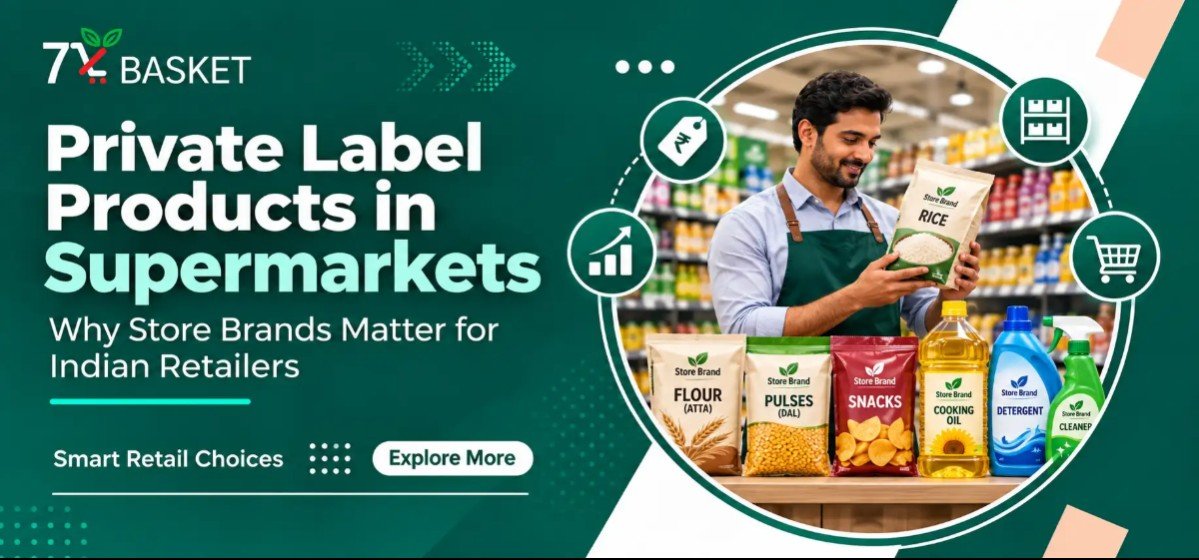
Private label products are items sold under your own brand name rather than the manufacturer 's brand. The supermarket decides the product range, pricing , packaging and positioning while manufacturing is usually handled by a 3rd party company. For example a supermarket might sell rice cooking oil biscuits or dishwashing liquid under its own brand. You can purchase these products from the same shelves as established brands but the products carry the supermarkets branding. This arrangement allows you to create a product range based on what your customers regularly buy. A neighborhood grocery store might focus on affordable staples while a larger supermarket might focus on introducing its own snacks or packaged foods.
Private label versus white label products
The term private label and white label are often used interchangeably but there is a difference in it. With private label products you can work with manufacturers to develop products according to your requirements. You can specify ingredients or quality standards. White label products are usually ready made products manufactured by a company and even sold to different retailers who put their own branding on the packaging.
Examples of private label brands in India
India already has several successful examples of store-owned brands. D Mart Avenue Supermarts sells grocery and household products under brands like Premia. These examples show how retailers can build recognition beyond the products of established manufacturers. But a smaller supermarket does not need to launch dozens of products immediately.
Store Brands vs National Brands: How They Compare
National brands have an advantage because customers recognize the names and may have been buying them for years. Retailers benefit from this familiarity because shoppers often visit a supermarket looking for specific branded products. Store brands work differently. They allow you to create your own identity while offering your customers another approach at a different price point. Neither approach needs to replace the other. A supermarket can stock national brands to attract customers and private labels to offer more value and build its own brand presence.
Factor | Private Label (Store Brand) | National Brand |
Who makes it | Usually manufactured by a third-party company for the retailer | Manufactured and managed by the brand owner |
Shelf price | Retailer has greater control over the selling price | Pricing is influenced by the brand's pricing strategy and market positioning |
Retailer margin | Can offer better margin opportunities depending on sourcing and costs | Margins depend on distributor terms, schemes and purchase agreements |
Customer trust | Must be developed through consistent quality and experience | Often benefits from existing brand recognition |
Marketing support | Retailer is responsible for building brand awareness | Brand owner generally supports advertising and promotions |
Quality responsibility | Retailer must ensure products meet its quality standards and applicable regulations | Brand owner manages product quality and compliance |
Unsold stock risk | Retailer may carry greater responsibility for inventory and packaging commitments | Depends on purchase terms, return policies and distributor agreements |
Why do store brands matter for Indian retailers?
The Indian grocery market is highly competitive. Your customers compare prices, look for familiar brands and expect supermarkets to offer products that fit the monthly household budgets. This creates an opportunity for you to introduce your own brands without depending on entirely established manufacturers.
Better margins on everyday products
You might often work with limited margins especially on products that customers purchase frequently. Private labels can provide more control over sourcing packaging and pricing. For example if you are selling your own package poha you can directly negotiate with a suitable manufacturer or supplier. By managing procurement and other costs carefully, you can create a better margin opportunity than just certain national brands. But better margins are not automatic. Manufacturing, packaging, storage, quality checks, and marketing expenses must all be considered.
Lower prices for value-conscious shoppers
Indian customers are careful about grocery spending, especially when purchasing essentials for the entire family. They might be willing to try a lesser-known brand if it offers good quality at a reasonable price. A store-owned brand of rice, sugar, or household cleaner can give your customers an alternative without forcing them to compromise on their everyday needs.
Customer loyalty to the store, not just the product
Think about a customer who regularly buys rice and cooking oil from your supermarket. If these products carry your brand and deliver consistent quality, customers might begin associating the positive experience with your business. This can encourage repeat purchases and also make your supermarket more memorable.
More control over price and supply
When you depend entirely on national brands, product selection and pricing decisions can be influenced by external suppliers. Private labels offer better flexibility. You can select pack sizes, adjust the product positioning and work with manufacturers to maintain supply based on customer demand.
A way to stand out from quick e commerce apps
Quick commerce platforms make grocery shopping very convenient but convenience is not the only reason customers choose the supermarket. Your customers also value the product variety, the ability to compare items physically and the confidence of buying from a familiar store. A recognizable private label gives you something of their own. Instead of competing only on discounts you can build a product range that our customers associate with shopping experience.
Which grocery categories work best for private labels?
Not every product category is equally suitable for a first private label launch. You must begin with products of customers purchased regularly and relatively easy to source.
Staples pulses and Atta: Rice wheat flour, moong Dal and other pulses are regular household purchases. Your customers often compare quality, cleanliness , quantity and price before choosing these products.
Edible Oils and Spices: Cooking oil turmeric chilli powder coriander powder and every spice blend have a regular demand. But customers are especially particular about taste purity and consistency. Proper sourcing and food safety checks are very important before introducing these products.
Home care and cleaning products: Dishwashing liquids, floor cleaners, and toilet cleaners offer opportunities beyond the food category. These products can attract repeat purchases but you must pay attention to formulation packaging safety and applicable requirements.
Snacks and ready to cook items: Namkeen roasted snacks instant mixes and ready to cook products can help you build a more interesting product range. Regional preferences also matter.
Best Categories for Private Label Products
Category | Example Products | Why It Works | Risk Level |
Staples and pulses | Rice, atta, poha, chana dal | Regular household demand and repeat purchases | Low to moderate |
Edible oils | Sunflower oil, groundnut oil, mustard oil | Frequently purchased grocery essential | Moderate to high |
Spices and masalas | Turmeric, chilli powder, garam masala | Regular cooking requirement and scope for product variety | Moderate |
Home care and cleaning | Floor cleaner, dishwashing liquid, detergent | Repeat demand and opportunities for different pack sizes | Moderate |
Snacks and namkeen | Bhujia, roasted chana, chips, farsan | Attractive for impulse purchases and regional preferences | Moderate |
Risks and challenges of private label products
Launching a store owned brand can be rewarding but supermarket owners should understand the responsibilities involved. A product carrying your store's name also carries your store's reputation.
Quality control and FSSAI compliance: Food products must meet the applicable Food Standards. You need to work with manufacturers who have required licenses and follow appropriate hygiene testing and manufacturing practices. It's very important for you to check ingredient specifications, batch records and shelf life before accepting supplies.
Packaging and legal metrology labelling: Packaging is not just about making your product look attractive. Packaged commodities must carry applicable declarations under the legal metrology rules. Depending on the product details might include ingredients and net quantity or packing details.
Winning customer trust: Your customers might hesitate before purchasing an unfamiliar store brand especially when it comes to food. You can address this by offering clear product information and consistent quality.
Minimum order quantities and unsold stock: Manufacturers might require retailers to order a minimum quantity. This becomes a problem if the product does not sell as expected. Instead of ordering large quantities immediately you need to start with manageable batch and study customer demand.
Private Label Risks and How to Reduce Them
Risk | What Can Go Wrong | How to Reduce It |
Quality | Customers complain about inconsistent taste, texture or performance | Approve samples, conduct testing and monitor every batch |
Compliance and labelling | Missing or incorrect declarations can lead to regulatory problems | Review packaging and verify applicable legal requirements before printing |
Customer trust | Shoppers prefer established brands and avoid unfamiliar products | Maintain consistent quality and provide clear product information |
Unsold stock | Products expire or remain on shelves for too long | Start with smaller orders and track sales before restocking |
When should a grocery store start its own private label?
A supermarket does not launch its own brand on the first day of the business. It is usually better to understand your customer behaviour and build a stable product range first.
Build sales with national brands first: You can start by stocking products that customers already recognize and purchase regularly; this helps you understand which categories generate consistent demand and what customers expect from different price ranges.
Test one low risk category: Once you understand your customers choose one suitable category for private label launch. Packaged staples are selected household products that might be easier to test than a large range of perishable or highly specialised items.
Track sales repeat purchases and feedback: You should not judge a product only by its first month sales. Check whether your customers purchase it again, whether complaints arise and whether the selling price works for your business.
Store Brands and National Brands in a Supermarket Franchise
If you are planning a supermarket franchise the decision to stock private labels should also consider the franchise model. Some franchise businesses might have a centralized procurement-approved supplier list or restrictions on introducing independently sourced products. Before launching a store-owned brand, you need to check the franchise agreement and discuss product sourcing and pricing permissions with the franchise. A balanced combination of national brands and approved private labels can help you maintain customer choice while supporting the supermarket business goals.
Private labels can help Indian supermarket retailers offer competitive prices, create your identity and build stronger customer relationships. But success depends on more than just putting a store name on the package. Start with products customers already buy, choose dependable manufacturers and maintain consistent quality.