a grocery store can have the right location good prices and regular customers but none of that helps if essential products are missing from the shelves. Your customers expect to find their everyday groceries whenever they visit. If they repeatedly find empty spaces where preferred products should be they might simply start shopping somewhere else. Behind every well stocked grocery store is a supply chain that keeps products moving.
From manufacturers and distributors to wholesalers several people are involved before a packet of biscuits a bottle of cooking oil or a bag of rice reaches the customer staff understanding supply chain management for grocery stores helps you make better purchasing decisions control stock and avoid unnecessary losses.
What is supply chain management for a grocery store?
Supply chain management is a process of sourcing, purchasing , transporting and selling products. In a grocery business it covers everything from ordering goods from suppliers to making sure they are available on store shelves when your customers need them. A typical grocery store supply chain includes manufacturers caring and forming agents, super stockists distributors and wholesalers. The exact route depends on your products and the brands. As a store owner, managing this process means knowing what to order, when to order and how much to keep and which suppliers offer reliable service.
Why does it matter for small grocery stores or supermarkets?
Poor supply management can create problems in both small shops and large supermarkets. Ordering too little can lead to stockouts, while ordering too much can be money tied up in products that are not selling. A well-managed grocery store supply chain helps you maintain product availability, reduce wastage, and plan purchases around actual customer demand. It also makes daily operations easier because you know where the stock is coming from and when the next delivery is expected.
How stock reaches your shelf
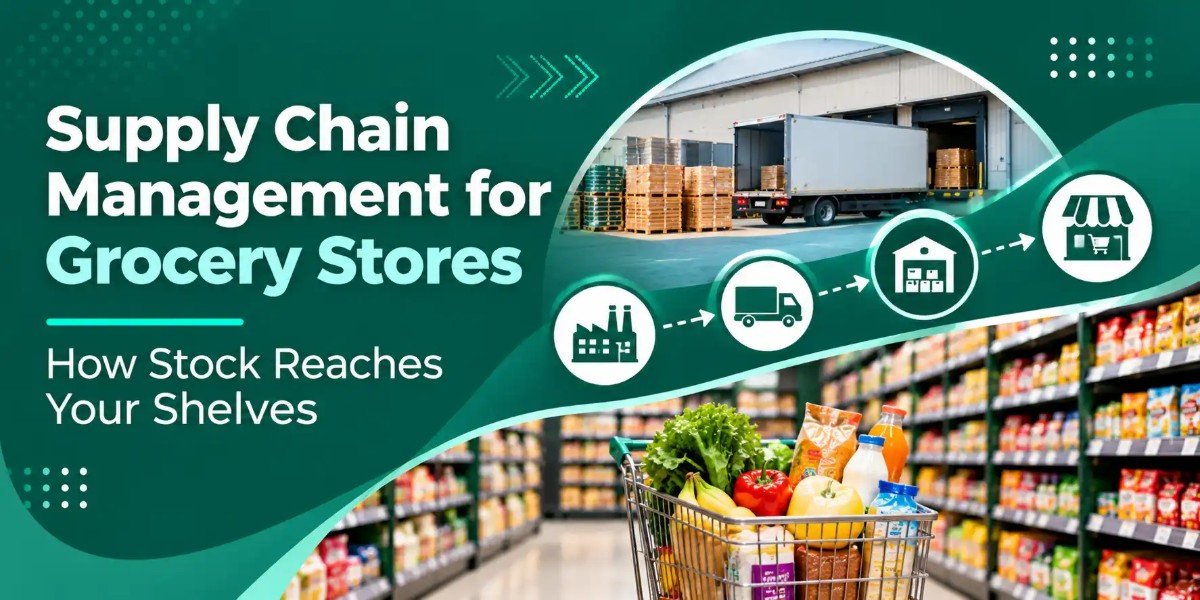
The grocery supply chain in India usually involves several stages. Some products pass through multiple intermediaries while others reach retailers through direct arrangements.
manufacturer and brands
The process starts with manufacturers. These are companies that produce packaged food, beverages, personal care products, and other everyday essentials. For example, a company manufactures biscuits and soap and supplies a temporary distribution network. Fresh produce and loose staples might follow different sourcing routes.
C&F agents and super stockists
Carrying and forwarding agents manage the storage and movement of products on behalf of manufacturers. They receive bulk stock, maintain warehouses, and also dispatch to authorized distributors. Super stock is purchased or handles large quantities and supplies smaller distributors across particular territories.
Distributors
Distributors purchase products from manufacturers or appointed stockists and supply them to retailers. They often work within a defined area and handle regular orders and sometimes promotional schemes.
Wholesalers and cash and carry stores
Wholesalers sell products in bulk retailers often across different brands and categories. Cash and carry stores also allow you to purchase goods in large quantities. They can be useful when your store needs products from several brands without placing separate orders with multiple.
Your store
Once the products arrive you can check the quantities expiry dates and packaging. The stock is then stored correctly and arranged on shelves. The final stage matters just as much as purchasing.
Stock Sourcing Options Compared
Source | Product Range | Buying Price | Credit Terms | Delivery | Best For |
Distributor | Specific brands and categories | Based on brand and distributor terms | May be available | Often scheduled | Regular FMCG purchases |
Wholesaler / mandi | Multiple brands or loose goods | Depends on quantity and market rates | Varies by seller | Collection or delivery, where offered | Bulk and fresh produce purchases |
B2B ordering app | Multiple brands and categories | Listed prices and available offers | Depends on platform | Platform-dependent | Convenient digital ordering |
Franchise central supply | Range selected for the franchise | Based on franchise procurement terms | Depends on agreement | Arranged through the network | Franchise partners seeking centralised sourcing |
Where do grocery stores buy their stock?
If you are planning to open a grocery shop one of your first questions will probably be where do grocery stores buy stock? There is no single answer. Most stores use a combination of suppliers depending on the product category and delivery requirements.
Buying from distributors
Distributors are a common choice for branded products. They might offer you scheduled deliveries and brand specific schemes. This works well for stores that regularly sell packaged food and household products.
Buying from wholesalers and Mandis
wholesalers are useful for buying multiple product categories in one place. Grocery stores might also source grains and pulses through wholesale markets depending on local availability.
Buying through b2b ordering apps
The platforms allow you to browse products, compare available options and place orders digitally. These apps can make purchasing more convenient especially when you want to reduce time spent visiting different suppliers.
Buying through a franchise central supply chain
A supermarket franchise might arrange product sourcing through a central procurement system. Instead of finding every supplier independently franchise franchise partners receive access to the brands purchasing network and ordering process.
Independent Store vs Supermarket Franchise Supply Chain
Factor | Independent Grocery Store | Supermarket Franchise |
Number of suppliers | Owner manages multiple suppliers | May use a central supplier network |
Buying power | Depends on individual order volume | May benefit from combined purchasing |
Product range | Selected by the owner | Often planned by the franchise |
How orders are placed | Directly with suppliers | Through the franchise's ordering process |
Stock availability | Depends on supplier coordination | Supported by central procurement |
Time spent on purchasing | Usually higher | May be reduced through centralised sourcing |
Common supply chain problems in grocery stores
Even experienced store owners face supply related challenges.
Stock out of fast moving items
Products like milk, bread biscuits and cooking oil might sell quickly. If you wait until the shelf is empty before placing another order your customers have to look somewhere else. So you need to track daily sales and set reorder levels for regularly purchased products.
Short expiry damage stop
Ordering more than stock in sales of common reason for wastage. Poor storage and damaged packaging can add to the full stop you need to check expiry dates during receiving order according to the demand and follow the stock rotation.
Price differences between suppliers
The same product might be available from different suppliers at different rates. Delivery charges schemes and payment terms can also affect your actual purchase cost. You need to compare the complete invoice and supplier terms rather than looking at the product price alone.
Too many suppliers can manage
Working with several suppliers can make ordering payments and delivery tracking difficult. You need to keep a list of approved suppliers and consolidate orders wherever practical.
Credit and cash flow pressure
Large purchases can block the money that the store needs for rent and salaries. You need to plan orders around your sales negotiable suitable payment terms and avoid buying excessive stock just to qualify for a scheme.
Best practices to manage our grocery store supply chain
A grocery store does not need a complicated system to manage stock well. A few consistent practices can make purchasing and daily operations easier.
Track sales and set reorder levels
You can check which products are regularly and how quickly they move, and set minimum stock levels so that you know when to reorder. This also supports better forecasting for a grocery store, as purchasing decisions become based on actual sales rather than guesswork.
Rotate stock FIFO and FEFO
FIFO means first in, first out: products received earlier should generally be sold first, while FEFO means first expiry, first out: products with the earliest expiry dates are prioritized. Both methods have produced expiry-related losses, especially for dairy and packaged food.
Check every delivery at receiving
You need to compare the delivered goods with purchase invoice. Check quantities product condition and expiry dates before accepting the stock.
Build good relationships with suppliers
Reliable suppliers can make a real difference to daily operations. You need to communicate clearly about order quantities and payment terms.
Use technology for ordering and inventory
Digital billing and stock management systems help you track sales, identify low stock products and review purchasing patterns. Good grocery store inventory management becomes easier when your sales and stock information are available in one place
How 7X basket supply chain supports franchise partners
7X Basket provides franchise partners with a centralized product procurement system. Franchise stores also receive cloud based POS and inventory tools to monitor stock and sales. This arrangement can help you reduce the time you spend coordinating with multiple suppliers allowing you to focus more on store operations and customer service.
A reliable supply chain keeps your grocery business running smoothly. When your products arrive on time stock is managed properly and suppliers are dependable you can serve customers without constantly worrying about empty shelves. Whether you run a small kirana shop or a supermarket, good purchasing and inventory practices can help control costs and support steady business operations.