Quick Summary
India's grocery market is worth over USD 600 billion and growing at 8 to 9% a year
Organized retail's share is expected to reach 35% by 2030, with most of that growth happening in tier 2 and tier 3 cities
Monthly rent in smaller towns runs 40 to 60% lower than in metros, which changes your break-even math significantly
The first-mover window in most tier 2 and tier 3 markets is open now but closing as more brands expand outward
Kirana store owners have a head start: converting an existing location is usually faster and cheaper than starting from scratch
What separates a pan-India grocery model that works: supply chain reach, local product flexibility, and store formats matched to the market
Two people in similar-sized tier 2 towns decided to open grocery stores in the same year. One joined a brand with a tested supply chain, fixed supplier pricing, and structured onboarding. The other went independent, planning to figure it out along the way. Three years later, only one of them is still growing.
India's organized grocery market, meaning branded stores and grocery store franchises run under a known name, currently holds a small share of a market worth over USD 600 billion. That share is expected to reach 35% by 2030, growing at roughly 8 to 9% a year. The question is not whether this shift is coming. It is whether you will be ready when it arrives in your town.
The Grocery Shift Is Real, and the Timing Matters
This section explains why the current moment is different from five years ago, and why the first-mover window in smaller markets is narrower than most people think.
Why Organized Retail Is Growing Right Now
The shift is being driven by real changes in how people shop:
UPI and smartphone adoption have changed payment habits at every income level
Post-pandemic buyers are more hygiene-conscious and brand-aware than before
Rising incomes in tier 2 and tier 3 cities have created buyers who want better options
Quick commerce apps have proved organized grocery demand exists well beyond metros
These are structural changes, not passing trends.
Where the Real Opportunity Is
Metros like Mumbai, Delhi, and Bengaluru already have well-established organized grocery players. A new supermarket franchise entering those markets competes for customers who already have multiple alternatives nearby.
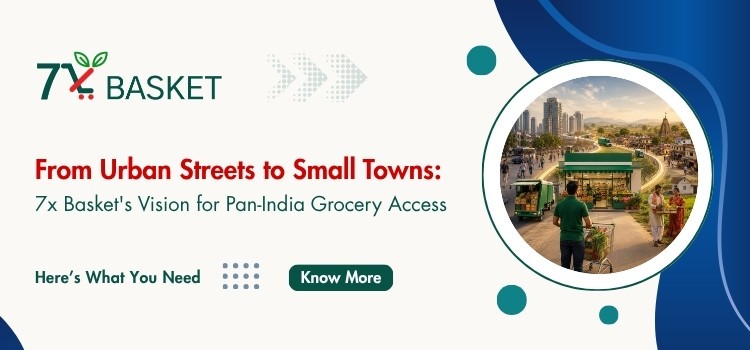
The growth, in terms of genuine first-mover positioning, is in tier 2 and tier 3 cities. Places like Gaya, Alwar, Muzaffarpur, and Anand still have most grocery shopping happening at kirana stores. Organized retail demand is building, but the supply is not there yet. That gap is the opportunity.
Why Smaller Towns Are the Better Entry Point for First-Time Investors
Here is a direct comparison of what the numbers look like across city types. These are general ranges based on current Indian retail data, not guarantees. Your actual results depend on your specific location, daily footfall, and how tightly you manage the store.
Factor | Metro City | Tier 2 / Tier 3 Town |
Monthly rent per sq ft | Rs 60 to Rs 100 | Rs 25 to Rs 40 |
Monthly rent for 1,000 sq ft | Rs 60,000 to Rs 1,00,000 | Rs 25,000 to Rs 40,000 |
Organized grocery competition | Well-established, multiple brands | Mostly kirana stores, minimal branded presence |
First-mover advantage | Largely gone | Real and available now |
Customer loyalty potential | Harder to build, many alternatives nearby | Stronger, fewer options to compete with |
Typical break-even timeline | 18 to 30 months | 12 to 24 months |
What Kirana Store Owners Should Think About
If you already run a kirana, the question is not whether to modernize. The market is already making that decision for you.
Customers who grew up buying from a kirana now compare that experience to the branded stores they visit occasionally in bigger cities. The bar has moved. A grocery franchise built on an existing kirana location is often the fastest way to meet that expectation without starting from scratch.
Converting is also cheaper than building fresh if your location already has foot traffic and regular customers. This guide on how to convert a kirana store into a modern supermarket walks through the full cost and steps involved.
The First-Mover Window Is Narrowing
In any given tier 2 or tier 3 market, there are realistically only two to three slots before organized grocery reaches saturation. Once a brand builds daily buying habit in a locality, displacing that is slow and expensive.
The people who get into these markets early are not always the most prepared. They are the ones who acted while the window was still open.
What Makes a Pan-India Grocery Model Actually Work
Understanding what separates a supermarket business that holds across hundreds of locations from one that struggles after the first few tells you exactly what to look for in any franchise you evaluate.
A Supply Chain That Reaches Your Town
Empty shelves are the fastest way to lose customers permanently. They find an alternative and often do not return.
A working pan-India grocery model needs a supply chain that can deliver to your specific location reliably and frequently, not just to warehouses near metro cities. When evaluating any franchise, ask about delivery frequency, minimum order size, and what happens during regional supply disruptions. Before committing to any number, read the true cost of opening a supermarket so there are no surprises after you sign.
Local Product Mix with Brand Consistency
A store in Punjab has a different shelf than one in Kerala. What sells during wheat harvest season in north India is not what moves in a coastal town during the monsoon.
A working pan-India grocery brand maintains consistent standards in layout, pricing, and hygiene while giving individual stores room to adapt the product mix. Brands that insist on identical shelves everywhere either over-supply some categories or consistently miss what local buyers want.
Store Formats That Fit the Market
A 5,000 sq ft supermarket in a town of 15,000 households will not perform the same as one in a dense urban colony. Matching format to market size is one of the clearest signals that a franchise brand has real experience outside metro cities.
Look for a franchise that offers multiple store sizes. Mini, mid-size, and large formats should each have a distinct investment range and revenue profile.
Read full guide on Mini Store vs Super Store vs Hyper Store: Which Format Is Better?
Before You Pick Any Grocery Franchise, Run This Checklist
Use this checklist before you sign anything. This is educational guidance, not legal advice. Have a qualified lawyer review any franchise agreement before you sign it. For a clause-by-clause breakdown of what to look for, read what to check in a franchise agreement before you sign.
Franchise Evaluation Checklist
Royalty amount is clearly defined, and its calculation base is stated (on sales, on margin, or on purchases)
Territory exclusivity is written into the agreement, not just verbally confirmed
Supply chain delivery frequency for your specific location is confirmed in writing
Training timeline and post-launch support are specific, with names and timelines
Exit conditions, lock-in period, and notice period are clearly stated
You have spoken to at least two existing franchisees, not referrals the brand selects for you
FSSAI and local licence responsibilities are clearly assigned in the agreement
A local lawyer has reviewed the full document
Your setup cost estimate is verified against an independent calculator, not just the franchisor's brochure
Where 7x Basket Fits In
We are building a grocery chain designed to work where most of India's grocery opportunity actually lives. Not just in metros, but in the tier 2 and tier 3 towns that have been underserved for too long.
Three Store Formats, One Brand Standard
We offer three store sizes matched to different markets:
Mini Store: 500 to 1,000 sq ft, suited for dense urban pockets with limited space
Super Store: 1,000 to 3,000 sq ft, the most common format for tier 2 towns
Hyper Store: 3,000+ sq ft, for high-footfall locations and larger catchment areas
What We Provide from Day One
From the moment you join the network:
Store design and setup guidance
Inventory management and supply chain support
Training and onboarding for you and your team
Branding materials and local marketing support
Technology for billing, stock tracking, and UPI payments
Zero royalty for the first 2 years. From year 3, royalty is 1% of monthly sales.
We currently have 150+ active franchise partners across 25+ states. Certain markets have limited slots remaining before that locality closes.
Use our investment calculator to get a size-specific cost estimate before the conversation.
Conclusion
The organized grocery shift in India is not a forecast anymore. It is happening right now, in towns that were not on any brand's expansion map five years ago.
Buyer expectations have changed. People want clean aisles, consistent stock, and a store they can count on. That standard has moved down from metros into tier 2 and tier 3 cities, quietly but steadily.
The people who benefit most from this shift will not be the ones who waited for the perfect moment. They will be the ones who read the numbers clearly, picked the right partner, and moved before the first-mover window in their town closed.
If you are still deciding, start with a cost estimate and one honest conversation. Most people find that is enough to know which direction to go.