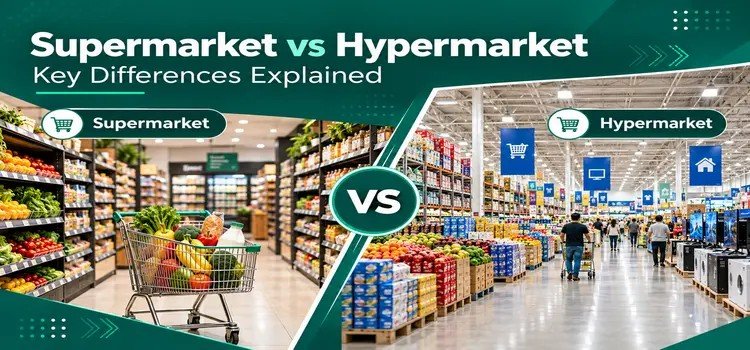
Think about your last grocery shopping trip. You probably visited a nearby store to pick up vegetables, milk, snacks and a few household essentials. Now think about going to a much larger store where you can buy all these items along with clothes, kitchenware , toys and other products. Both stores serve a purpose but they operate completely differently. This is the basic difference between a supermarket and a hypermarket. A supermarket mainly focuses on groceries and everyday essentials while a supermarket combines grocery shopping with a wider range of non food products. In India organized retail has grown to include different store formats from neighborhood grocery outlets to large shopping destinations. Brands like More Supermarket, D Mart, and Lulu Supermarket give you different ways to buy what you need. Understanding the differences between supermarkets and hypermarkets can help you decide where to shop, compare prices or explore retail opportunities.
What is a supermarket ?
A supermarket is a self service retail store where you can purchase groceries, fresh produce and packaged products besides other household essentials. Unlike a small neighborhood grocery shop a supermarket usually offers a wider selection of brands and products. You can compare different varieties of rice cooking oil snacks and cleaning products besides other everyday items before deciding what to buy. Supermarkets are designed around regular shopping needs. You can visit them weekly to restock your kitchen or pick up a few essential ingredients before preparing a meal. A supermarket's size depends on location and business model.
Features of Supermarket
Daily Necessities: Most stores concentrate on groceries, fresh produce, packaged food and beverages.
Merchandising self service: You can pick up items from the shelves and pay at the checkout.
Convenient locations: Supermarkets are often located near residential areas, which encourages people to shop more frequently.
Customer visits on a regular basis: People often go back to buy groceries each week and replenish household supplies.
There are also different types of supermarkets including independent neighbourhood supermarkets and larger grocery focused stores. Depending on the location prices and product range each format is catering to customers in a different manner.
Supermarket examples in india
Some familiar examples of supermarket style in India include:
More supermarket: It offers groceries, packaged foods, fresh produce and everyday household items.
Reliance smart point: It focuses on convenient grocery shopping and daily essentials with the product range varying by outlet.
Star bazaar: You can get groceries, fresh food and household products through its organized retail format.
What is a hypermarket?
A hypermarket is a large retail store that combines a supermarket grocery selection with a broader range of non-food products. Along with groceries customers might find clothing, kitchenware , home accessories and luggage. Imagine you are preparing for a family gathering. You need groceries, snacks , cleaning supplies and storage containers. A hypermarket might allow you to purchase most things in one visit. Hypermarkets generally operate from larger premises because they need space for multiple departments and wider product selection. The main difference is not just the store size.
Key Features of a Supermarket
White product range: You can shop for groceries, clothing, kitchenware , home products and other merchandise.
Large retail space: Different departments require more floor space compared to a typical supermarket.
One stop shopping: You can purchase products from several categories during the same trip.
Promotional offers: Some supermarkets provide discounts on selected products and larger packs.
Hypermarket Examples in India
Looking at examples of hypermarkets in India, Lulu Hypermarket is one of the clearest examples.
Lulu Hypermarket offers groceries, fresh food, household products, clothing, electronics, and other merchandise depending on the location.
Reliance Smart Bazaar offers a broader mix of food and non-food products, although the exact format varies.
D Mart is known for groceries, packaged foods, personal care items and household essentials. It is described as a supermarket or a large format value retailer rather than a traditional hypermarket.
Supermarket vs Hypermarket: Key Differences at a Glance
Comparison factor | Supermarket | Hypermarket |
Store size | Small to medium-sized | Large to very large |
Product range | Groceries and household essentials | Groceries and extensive non-food merchandise |
Location | Often near residential areas | Often in large commercial spaces |
Shopping purpose | Regular grocery purchases | Comprehensive shopping trips |
Product selection | Focused range | Broader range across categories |
Shopping time | Usually shorter | Often longer |
Staffing | Generally fewer employees | Often more employees |
Setup investment | Usually lower | Usually higher |
Operating costs | Relatively lower | Relatively higher |
Target customers | Local households and regular shoppers | Families and shoppers buying across categories |
7 major differences between supermarkets and hypermarkets
The comparison table gives you a quick overview but if you are deciding where to shop and are researching detail formats for a business these differences are worth considering.
Store size and layout
Supermarkets are usually more lean in layout. You can walk through the grocery aisles, grab your necessities and finish your shopping without spending a lot of time walking from department to department. Hypermarkets have products from various categories, so they require more floor space. You might need to walk through several sections before completing your shopping.
Variety of products
A supermarket mainly focuses on groceries, fresh produced and packaged foods. A hypermarket goes beyond these categories. Along with food it might offer clothing toys and home accessories. If your shopping list includes only groceries you might not need the additional variety. But when you want to buy several things in one trip the wider selection can be useful.
Shopping experience
Supermarkets are convenient for quick visits. You can stop by after work, pick up a few missing ingredients and return home without turning it into a long shopping trip. Hypermarkets are better suited to planned visits when you have a longer list. You can browse different departments and purchase groceries and household products together.
Pricing and discounts
In supermarket versus hypermarket price comparison is not as simple as just saying one is always cheaper stop hypermarkets might offer attractive discounts on bulk packs or selected products. But supermarkets can also provide competitive prices through promotions and store brand products. For example a large pack of detergent might just offer better value per kilogram but only if you actually need that quantity.
Location and accessibility
Supermarkets are often found near residential areas making them easy to reach for everyday purchases. Hypermarkets generally need larger premises and might not operate in commercial areas or shopping complexes.
Investment and operating costs
If you are a business owner the size of the store affects more than rent. A supermarket might need less floor space of more focused inventory and fewer employees. A hyper market typically requires greater investment in premises equipment and stock. Actual cost depends on the city and the lease terms.
Customer buying habits
Supermarket shoppers often purchase products they use regularly like milk, rice vegetables and cooking oil. Hypermarket shoppers might plan regular large trips for monthly groceries, household supplies, and seasonal shopping. The same family might use both formats depending on what it means that week.
Supermarket and hypermarket examples in india
India's more organized retail market includes several brands offering different shopping experiences. Looking at their product ranges helps explain how the formats work in practice. More supermarkets focus on grocery shopping, fresh produce packaged foods and household essentials. It's a useful example of a grocery focused retail format. Lulu Hypermarket offers a wider selection including groceries, fresh food, homeware and electronics. Its multi category approach makes it a clear example of hypermarket style shopping.
Smart is another popular brand among customers seeking value shopping. It sells groceries, packaged foods, personal care products and household essentials. Reliance smart bazaar offers groceries and other household products with selection and store format varying by location.
Supermarket vs hypermarket: which is better for customers?
There is no single answer for everyone. The right store depends on your shopping list budget and available time. A supermarket is a practical choice when you need a few groceries or daily essentials or preferred shopping close to home. It is also a great choice if you want to finish your shopping quickly and buy fresh produce and smaller quantities. For example if you run out of milk, vegetables , cooking oil and breakfast ingredients a nearby supermarket might be all you need. A hypermarket might be a more useful option when you have a long grocery list and you want to buy products from several categories. Even if you want to compare products across different departments then you must consider visiting a hypermarket.
Supermarket vs hypermarket: which is better for starting a retail business?
If you are thinking about opening a retail store, choosing between a supermarket and hypermarket requires a closer look at your budget location and target customers. Now supermarkets might be a sensible starting point for you if you want to serve a residential neighborhood. You can focus on products people buy regularly like groceries, packaged foods and daily products. A hypermarket usually needs more space, a wider inventory and greater working capital. It also requires careful planning to manage multiple product categories without tying up too much money in slow moving stock. Before choosing a format you need to consider questions like where will the store be located? How much investment can you manage? What will customers buy?
If you are researching a supermarket franchise in India do not just focus on the initial franchise fees. The total supermarket franchise investment might also include store interiors equipment opening inventory licenses and rent deposits. Profitability depends on sales product margins and expenses. Before investing, review the business model and confirm the terms directly with the company. You can also explore more supermarket business guides to learn more about store planning and inventory.
How does 7X basket offer different supermarket store formats?
For a retail brand like 7X Basket the choice of store format should reflect how people in the target area prefer to shop. A supermarket style outlet can focus on groceries and everyday household products. This makes sense for you if you want to pick up the regular supplies for traveling far. A larger store can accommodate a wider selection of products and give your customers more options during visit. But a broader range also means more stock to manage more space to organize and greater attention to inventory planning.
The difference between a supermarket and hypermarket comes down to size product range shopping purpose and operating requirements. Supermarkets mainly cater to everyday grocery needs while hypermarkets combine groceries with a wider selection of non food products. For customers, the choice depends on the shopping trip: a supermarket is convenient when you need a few essentials, while a hypermarket can be useful when you want to purchase several types of products in one place. For aspiring business owners decision comes down to investment location and the ability to manage daily operations. Once you understand all the differences it becomes easier to choose the format that meets your needs whether you are planning your next shopping trip or exploring your supermarket business in India.