Blog & Insights
Franchise tips, business insights and 7x Basket updates.
How To Price Products In A Supermarket: A Practical Pricing Strategy
Getting the price wrong on a shelf product costs you twice. Once when a customer skips it for a cheaper option down the road, and again when slow-moving stock ties up the working capital you needed elsewhere.
Working Capital for a Grocery Store: How Much Cash You Need Every Month
Working capital is the cash your store needs to run day to day. In plain terms, it is what you have (cash in hand plus stock on shelves) minus what you owe (supplier dues, rent, salaries due).
Super market Franchise: Your Gateway to a Profitable Retail Business
Anyone can open a grocery shop. Very few people can build a working retail system, meaning supplier relationships, fair pricing, inventory control, and a layout that moves customers through the store efficiently, on their own in the first year. That system is what a Supermarket Franchise in India hands you on day one. That is the real value of the franchise route, not the brand name on the signboard.
What to Check in a Franchise Agreement Before You Sign
Before you sign, check every fee and its base, the term and renewal rules, territory rights, supply obligations, written support, and exactly how you exit.
Grocery Store Franchise: Why It's a Profitable Retail Investment
Introduction The grocery retail industry in India is experiencing tremendous growth, driven by increasing consumer demand, urbanization, and a preference for organized retail. With the rising need f...
7x Basket's Vision for Pan-India Grocery Access: From Urban to Small Towns
India's organized grocery market, meaning branded stores and grocery store franchises run under a known name, currently holds a small share of a market worth over USD 600 billion. That share is expected to reach 35% by 2030, growing at roughly 8 to 9% a year. The question is not whether this shift is coming. It is whether you will be ready when it arrives in your town.

From Salary to Store Owner: The Practical Guide to a Midlife Career Change
You are probably not the kind of person who makes rash decisions. But when owning a store starts making more sense than waiting for the next appraisal cycle, it is easy to move faster than you should. This guide is for slowing that down just enough.
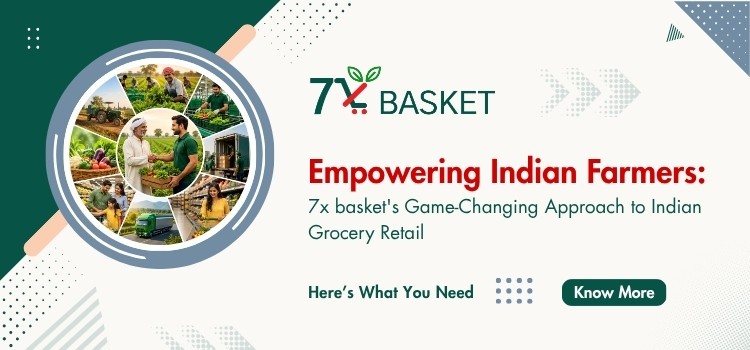
Farm To Shelf: How 7x Basket Sources Fresh Produce In Indi
Direct and organized sourcing improves farmer incomes, gives local vendors access to quality products at competitive prices, and reduces the carbon footprint created by unnecessary transport across long intermediary chains. When organized grocery retail grows across more Indian cities, the benefits reach farmers, local entrepreneurs, local communities, and every consumer who wants fresh food from a store they can trust.
How to Calculate ROI in a Supermarket Franchise Business
To calculate ROI in a supermarket franchise, divide your net annual profit by your total investment, then multiply by 100. For example, a store that earns Rs 6 Lakh in net profit a year on a Rs 13 Lakh investment has an ROI of about 46 per cent, and recovers the money in a little over two years.